

OEM vs Retail Windows Keys: Which One Should You Buy Worldwide?

Introduction
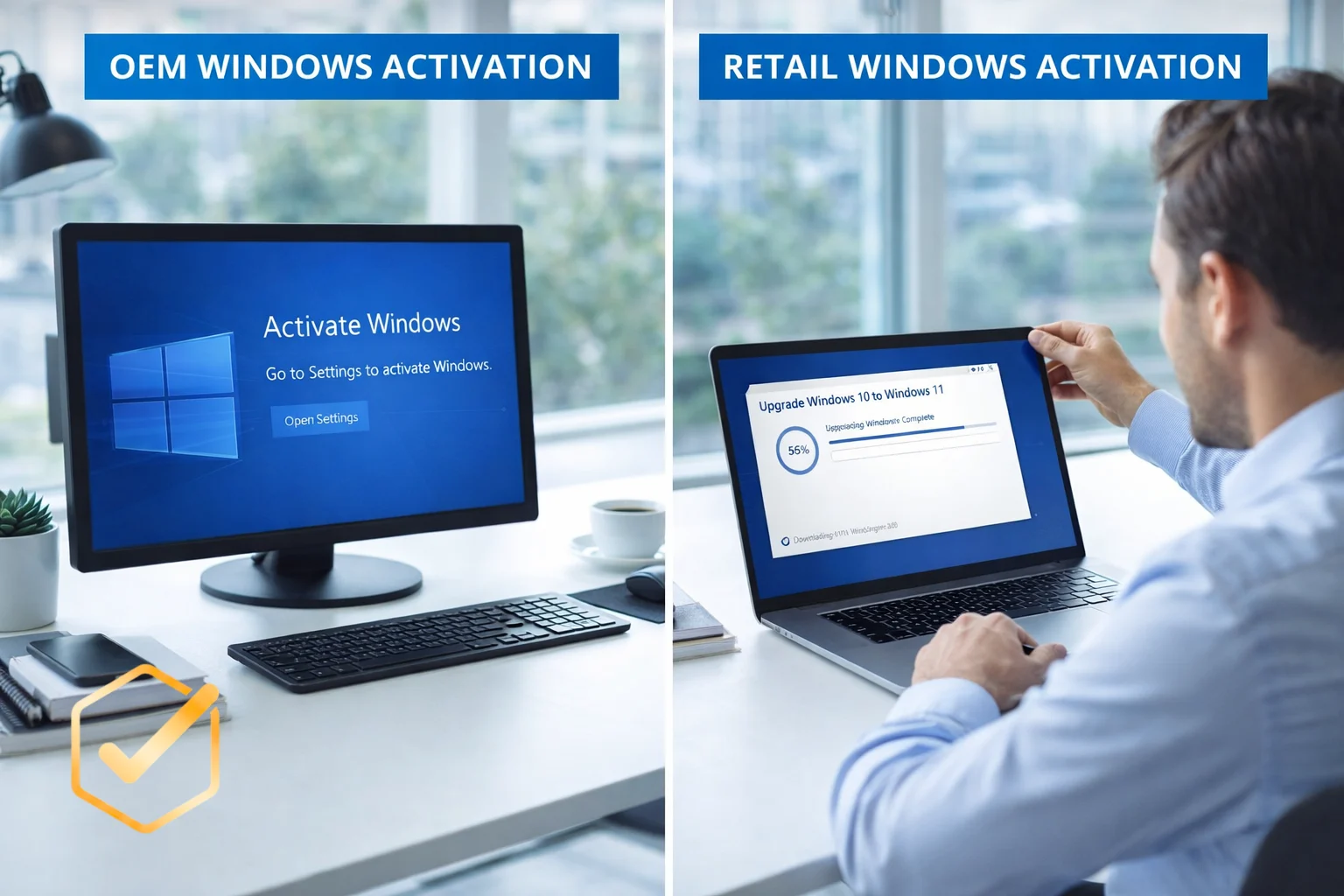
The difference between OEM and Retail Windows product keys comes down to one critical factor: flexibility versus cost. OEM licenses are tied to one device permanently, while Retail licenses can be transferred to another PC.
This distinction matters more than most buyers realize. Choosing the wrong Windows license type can limit future upgrades, cause activation issues, or lead to unnecessary spending. This guide explains the real differences clearly so you can choose the right Windows license anywhere in the world.
Why Buyers Get Confused About Windows License Types
Most people searching for a Windows key see two prices and assume the cheaper option is always better.
Windows license types are priced based on usage rights, transferability, and long-term flexibility.
- Buying OEM without knowing it is hardware locked
- Paying for Retail when OEM would have been enough
- Not understanding activation differences
- Assuming both licenses work the same way
What Is an OEM Windows Key
OEM stands for Original Equipment Manufacturer.
An OEM Windows key is designed for installation on a single device and becomes permanently tied to the motherboard once activated.
- Lower cost
- One device only
- Non-transferable
- Lifetime activation on that device
OEM licenses are commonly used for personal desktops, student laptops, prebuilt systems, and fixed hardware environments.
You can explore available options in the Windows 10 and 11 license category.
What Is a Retail Windows Key
A Retail Windows key offers flexibility and long-term value.
Retail licenses can be transferred to another computer as long as they are removed from the previous system.
- Transferable license
- Ideal for hardware upgrades
- Better for professionals and businesses
Retail licenses are best for freelancers, IT administrators, small businesses, and users who upgrade hardware frequently.
Compare available options inside the Windows OS category page.
OEM vs Retail Windows Comparison
| Feature | OEM | Retail |
|---|---|---|
| Transferable | No | Yes |
| Hardware Lock | Motherboard-bound | Flexible |
| Cost | Lower | Higher |
| Best For | Fixed personal systems | Professionals and businesses |
Activation Differences Explained
Both OEM and Retail Windows licenses activate in the same way during installation.
- Install Windows
- Enter product key
- Activate online or by phone
The difference appears when hardware changes occur. OEM licenses may fail activation after motherboard replacement, while Retail licenses allow reactivation.
For official activation details, refer to Microsoft’s Windows activation documentation.
Why Retail Windows Costs More
Retail licenses include transfer rights, which provide long-term flexibility.
OEM licenses cost less because they limit usage to one device. Retail licenses cost more because they protect future upgrades.
Which Windows License Should You Buy
Choose OEM If
- You use one stable computer
- You want the lowest cost
- You do not plan to upgrade hardware
- You are a student or home user
Choose Retail If
- You upgrade hardware regularly
- You run a business
- You manage multiple systems
- You want long-term flexibility
Windows 10 and Windows 11 License Rules
Both Windows 10 and Windows 11 follow the same OEM and Retail licensing rules.
Browse related licenses:
Common Myths About OEM and Retail Windows
OEM licenses are fully legal when sold properly. Retail licenses do not offer better performance, only flexibility. Both receive updates if genuine.
Frequently Asked Questions
What is the main difference between OEM and Retail Windows keys?
OEM is locked to one device, while Retail can be transferred.
Is OEM Windows legal?
Yes, OEM licenses are legal when purchased from a trusted seller.
Can I upgrade my motherboard with an OEM key?
Major motherboard changes may require a new license.
Can Retail Windows be transferred to another PC?
Yes, as long as it is removed from the previous system.
Does OEM Windows receive updates?
Yes, genuine OEM licenses receive updates normally.
Is Retail Windows worth the extra cost?
Yes, if you plan future hardware upgrades.
Can I reinstall Windows using the same OEM key?
Yes, on the same device.
Which license type is best for businesses?
Retail licenses are better for growing or changing environments.
Do OEM and Retail perform the same?
Yes, performance is identical.
Is OEM good for gaming?
Yes, if hardware will remain unchanged.
Can one Retail key activate two PCs?
No, only one system at a time.
Does region affect OEM or Retail activation?
Most genuine licenses activate globally.